
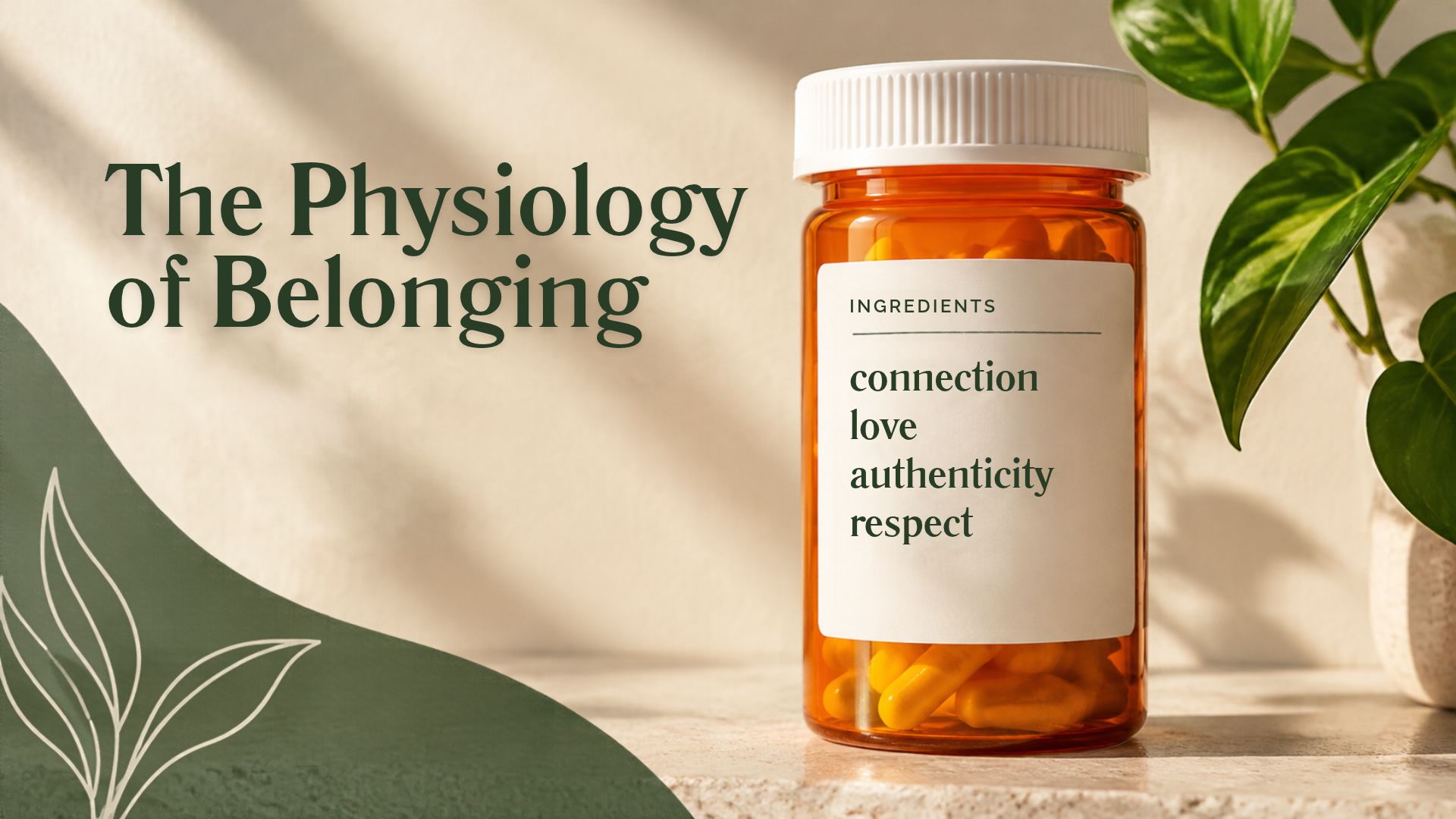
After practicing Traditional Chinese Medicine for over two decades, I’ve come to appreciate that some forms of nourishment will never appear on a nutritional label. And for this, I am so thankful.
Working with a patient’s symptoms also means connecting with and guiding their energy. This energy can be influenced not only by what we put into our bodies, but also by what happens between us as human beings.
The science is remarkable. A landmark study involving more than 300,000 people found that those with stronger social relationships had 50% higher odds of survival. Researchers have also found that spontaneous laughter can reduce cortisol levels by approximately 32% compared with control conditions, while the simple act of holding the hand of someone we trust can alter the brain’s response to a perceived threat.
Even the ritual of sharing a meal has scientific significance. Research from Oxford suggests that eating together, laughing, and reminiscing are associated with greater happiness, social connection, and a sense of belonging.
Conversely, you may deeply love those gathered around your Thanksgiving table, yet interactions with them may still dysregulate your nervous system.
To help navigate these experiences, I’m sharing a powerful tool called the Zipper Meditation. Consider using it when you find yourself unusually quick to react around someone, mentally foggy or confused, or disempowered in your decision-making.
At times, it may feel as though our energy has become enmeshed with someone else’s. This can occur when past or present conflicts remain unresolved or when there is an imbalance within a relationship.
I have found that returning to this meditation as needed has helped both me and others with whom I have shared it. While the practice itself does not resolve the conflict, it can offer valuable space to reset, realign, and return to a clearer sense of oneself.
In Traditional Chinese Medicine, health has never been viewed as an exclusively physical phenomenon. Within its traditional framework, each organ system has an emotional counterpart.
Consider the seemingly ordinary moments of Thanksgiving: the familiar aromas emerging from the kitchen, the recipes that have survived generations, the stories we have heard a dozen times, and the laughter that inevitably accompanies them.
Beneath these experiences, something rather extraordinary may be occurring within us.
Every Eastern Medicine practitioner learns early on that just because something is invisible doesn’t mean it doesn’t exist.
We are, after all, biological beings whose physiology is influenced not only by what we consume, but also by the quality of our connections.
So during this holiday season, consider the nourishment found not only on your plate, but around your table.
There is, indeed, a physiology to belonging.
Wishing you and yours an enriching and beautiful holiday season.
Love, Vivianne
Zipper Meditation: Resets and Realigns.
Click and Play. I wouldn’t lead you astray.
References:
Coan JA, Schaefer HS, Davidson RJ. Lending a hand: social regulation of the neural response to threat. Psychol Sci. 2006 Dec;17(12):1032-9. doi: 10.1111/j.1467-9280.2006.01832.x. PMID: 17201784.
Dunbar, R.I.M. Breaking Bread: the Functions of Social Eating. Adaptive Human Behavior and Physiology 3, 198–211 (2017). https://doi.org/10.1007/s40750-017-0061-4
Kramer CK, Leitao CB (2023) Laughter as medicine: A systematic review and meta-analysis of interventional studies evaluating the impact of spontaneous laughter on cortisol levels. PLoS ONE 18(5): e0286260. https://doi.org/10.1371/journal.pone.0286260

